
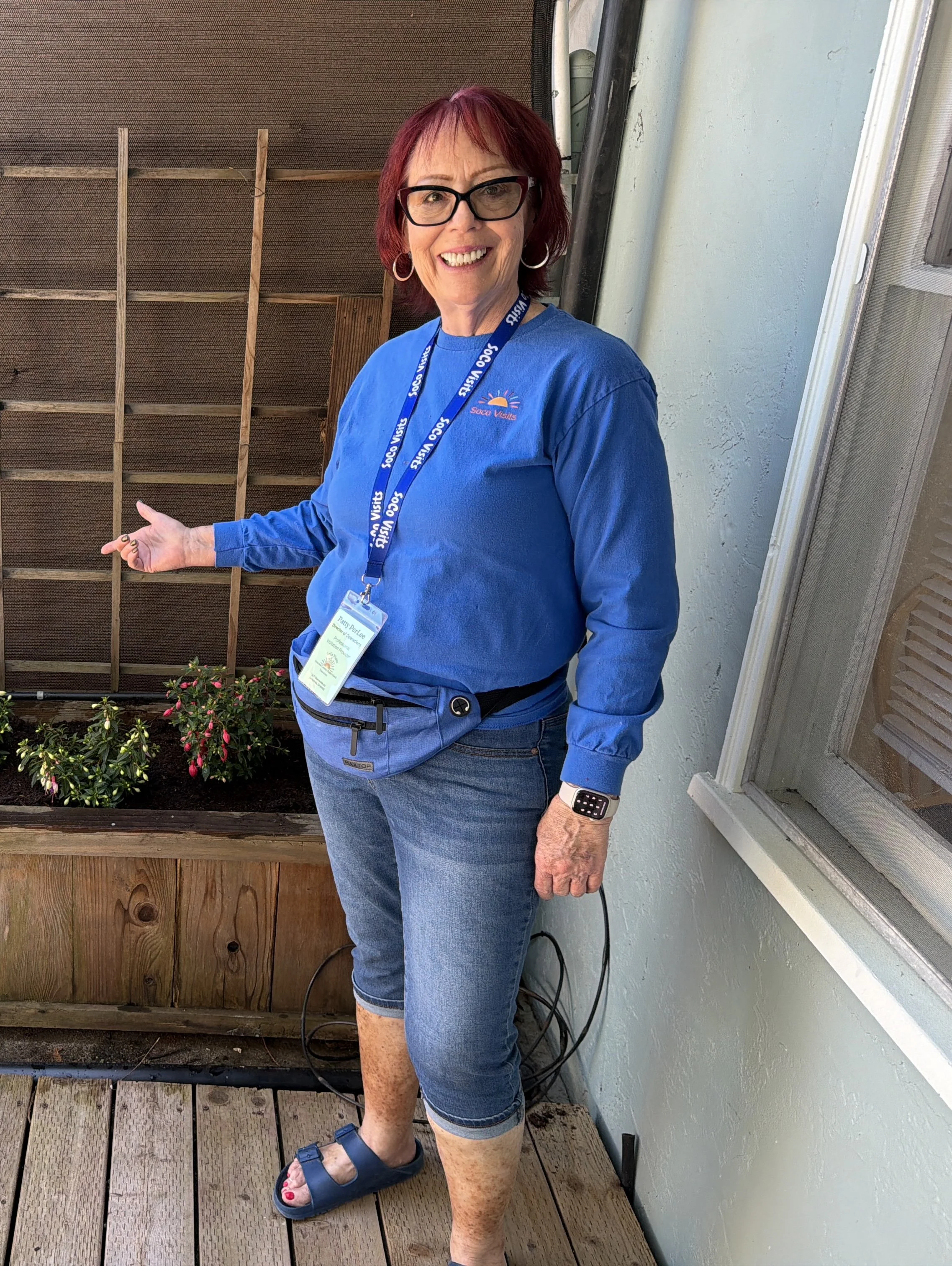
Meet Patty.
Patty offers a warm, non-judgemental, and child-centered environment for kids and their parents to connect in a safe and comfortable way. She engages both parents and children in efforts to ensure the process is smooth and child-centered.
She is a professional visitation supervisor, and meets all qualifications as set forth by the California Rules of Court Standard 5.20. This includes training in mandated reporting requirements, has a clear LiveScan report, and is TrustLine Certified.
Qualifications
-

TrustLine Certified
-

Clear LiveScan
-

24-Hours In-Person Training
At Soco Visits, we believe that supervised visitation is not just a service; it’s a vital opportunity for families to foster positive relationships in a safe environment. Our mission statement, "Reconnecting families one visit at a time," embodies our dedication to this important work. Here’s more about what sets our team :
Comprehensive Training and Expertise
- California Standards Compliance: All of our providers have undergone extensive training adhering to the California 5.20 Uniform Standards, ensuring they are well-versed in the legal and emotional nuances of supervised visitation. We are an unbiased third party who follow the court order and report facts, observations, and direct statements without any opinions.
- Specialized Skills: Each staff member brings unique skills and experiences, allowing us to match families with the right provider based on individual needs and circumstances.
Personalized Support
- Tailored Approaches: We recognize that every family is different. Our providers work closely with both parents to understand their specific situations and tailor the visitation experience accordingly.
- Empathy and Understanding: Our team is trained to approach each case with sensitivity and compassion, recognizing the emotional weight of the visitation process for both parents and children.
Safety and Confidentiality
- Secure Environment: The safety of the children and the emotional well-being of both parents are our top priorities. Our facilities are designed to provide a secure and comfortable space for visitations with 26 cameras to insure the safety of all parties.
- Confidential Process: We maintain strict confidentiality protocols, ensuring that all information shared during the process is kept private.
Ongoing Support
- Continuous Communication: We keep lines of communication open between our providers and the parents to address any concerns that may arise throughout the visitation process.
- Feedback Mechanism: We actively seek feedback to improve our services and ensure that the needs of families are met effectively.
Ready to Assist You
Our full staff is prepared to accommodate your personal needs, whether it’s through flexible scheduling, specific requests for visitation environments, or ongoing support throughout the process. We are here to ensure that your experience is as smooth and supportive as possible.
If you have any questions or would like to learn more about how our team can assist you, don’t hesitate to reach out! We’re here to help you navigate this important journey—after all, we’re dedicated to reconnecting families one visit at a time.
FAQs
*
FAQs *
-
Professionally supervised visitation in California refers to a court-ordered arrangement where a neutral third-party professional oversees visits between a non-custodial parent and their child. This supervision aims to ensure the child's safety and well-being during interactions with the parent. The professional supervisor, often trained in child development or family dynamics, facilitates the visit, monitors interactions, and provides reports or feedback to the court. This arrangement is typically implemented in situations where there are concerns about the child’s safety, parental behavior, or the parent-child relationship, ensuring that visits occur in a supportive and structured environment.
-
An handling supervised visitations where a restraining order is in place, we follow a structured and careful process to ensure the safety and well-being of all parties involved. Here’s how we manage these visitations
- Arrival and Departure Times: We carefully coordinate the arrival and departure times of each parent. This ensures they do not overlap, minimizing the possibility of any contact.
- Individual Time Slots: Each parent is assigned a specific time slot for both arrival and departure, maintaining a clear separation
- Designated Entrances: We utilize different entrances for each parent to further reduce the risk of accidental encounters. This involves using separate doors or entrances that lead to distinct areas.
- Clear Signage: Each entrance is clearly marked to guide the parents and ensure they understand which entrance to use.
-
When a court order is in place regarding supervised visitation, it will typically specify who is responsible for the payment of services. In most cases, the noncustodial parent is responsible for these costs.
-
I Frequently Asked Questions (FAQs) About Supervised Visitations
1. What if my child is reluctant or doesn’t want to go to the visit?
Answer: The custodial parent is required by court order to bring the child to visitations, regardless of the child’s reluctance or refusal. Compliance with the court order is essential.
2. Are gifts allowed during visitations? Answer: Gifts are permitted on a limited basis. They are allowed only on the first visit, birthdays, and cultural or religious holidays that are significant to the individuals involved.
3. Am I allowed to bring other people to the visits, such as my parent, spouse, or my child’s sibling?
Answer: Only individuals specifically listed in the court order are permitted to attend the visitation.
4. Can I make phone calls to the grandparents or siblings during visitation?
Answer: No, making phone calls to third parties during the visit is not allowed, as it introduces individuals who are not named in the court order.
5. If the court order specifies certain dates and times, can we change them if both parents agree?
Answer: No, the specified dates and times in the court order must be followed. To change them, a stipulation must be filed and approved by the court.
6. Does the custodial parent have the right to decide where the visitation will take place?
Answer: No, the location of the visitation is determined by the professional provider overseeing the visit, who makes the final decision on the venue.
7. What should I do if my court order allows for visits of up to four hours twice a week, but I can't afford that?
Answer: You have the option to shorten the hours of the visit to fit your financial situation, as the order states "up to" four hours.
8. There’s a restraining order in place, and I don’t want to see the other parent. How is this managed?
Answer: To ensure safety, arrival and departure times for each parent are staggered to prevent any chance of encountering the other parent.
9. What happens if my child gets upset during visitation?
Answer: Acute distress is defined as behavior that creates an unsafe situation. Typical crying or tantrum-like behaviors do not qualify as acute distress, and visits will continue unless a serious issue arises.
This FAQ sheet can serve as a helpful guide for parents navigating the complexities of Supervised Visitation.
-
Taking the first step towards supervised visitation is a significant decision, and we're here to guide you through the process smoothly. Here’s what to expect:
1. Contact Us: Reach out to Soco Visits at your convenience. You can do this by:
- Phone: Give us a call to speak directly with a representative.
- Email: Send us your inquiries, and we’ll respond promptly.
- Website Inquiry: Fill out the contact form on our website, and we’ll get back to you as soon as possible.
2. Discuss Pricing: Once you reach out, we’ll discuss the pricing structure for our services. Transparency is key, and we want to ensure you have all the necessary information.
3. Intake Documents: After agreeing on the terms, we will send out the intake documents through a secure, private program. These documents will be provided separately to both parents to maintain confidentiality.
4. Information Collection: Once we receive the completed documents, we will schedule an orientation appointment. This will be done separately for both the custodial and non-custodial parents to ensure everyone is comfortable.
5. Schedule the First Appointment: After the orientation, we’ll set up the first supervised visitation appointment.
The entire process typically takes 3 to 10 days, depending on the level of cooperation from the custodial parent.
We’re here to support you every step of the way, ensuring a smooth transition into supervised visitation. If you have any questions or need further assistance, don’t hesitate to reach out!